
Passionate about the River Exe?
Want to get involved? Whether you want to become a citizen scientist to find pollution hotspots, or advocate for River Exe species to decision-makers, there’s plenty to support.
Expanding our Assembly of River Beings
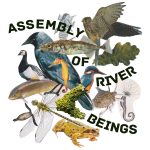
Following a wonderful pilot event during our River Exe Action Week, which was kindly supported by LUSH in the week of World Rivers Day 2024, we’re hoping to bring the Assembly of River Beings to our wider community and develop the River Exe Covenant. Read more about our pilot Assembly.
Tailoring our Citizen Science to the Exe
We’re developing a new River Exe citizen science approach for 2024-2026.
We’re very lucky to have 137 citizen science volunteers led by a team of 8 who are now leading a tailored approach to our River Exe testing. Since 2023 we’ve worked with Westcountry Rivers Trust (WRT) to support their long term surveillance of the Westcountry’s rivers.
However, FORE’s goal is also to protect the health and safety of our Exe catchment community. Our aim is to help the Environment Agency (EA) and their partners WRT identify pollution hot spots in target sub-catchments so that further investigations can be instigated by the appropriate body. This will involve increasing the spatial and temporal density of the existing WRT CSI network and filling in gaps in the network. We also want to improve the monitoring of key nutrient parameters in the target reaches by using a combination of electronic phosphate and ammonia metres plus nitrate test strips.
So in 2025 we’ll start testing for nitrates and ammonia to identify excessive nutrient pollution due to diffuse pollution or sewage-related storm overflow discharges in tributaries Creedy, Clyst and Culm that join the Exe after Tiverton with testing kit generously funded Sea-Changers. This will add to our existing WRT measures of temperature, dissolved solids, turbidity and phosphates.
Meanwhile downstream we’re reaching out to partners to place continuous water monitors in the estuary to be able to alert water users in real-time about combined sewage overflows (CSOs). We are also in the early stages of planning a future sampling/lab analysis programme, subject to additional funding being available. This would be at a few selected locations where pollution from road runoff and for-ever-chemicals (PFAS) are a potential risk to river quality and good ecological status. This type of pollution is rapidly becoming a growing concern nationally and internationally and will be the subject of further discussions with both WRT and EA.
What we’ll be doing:
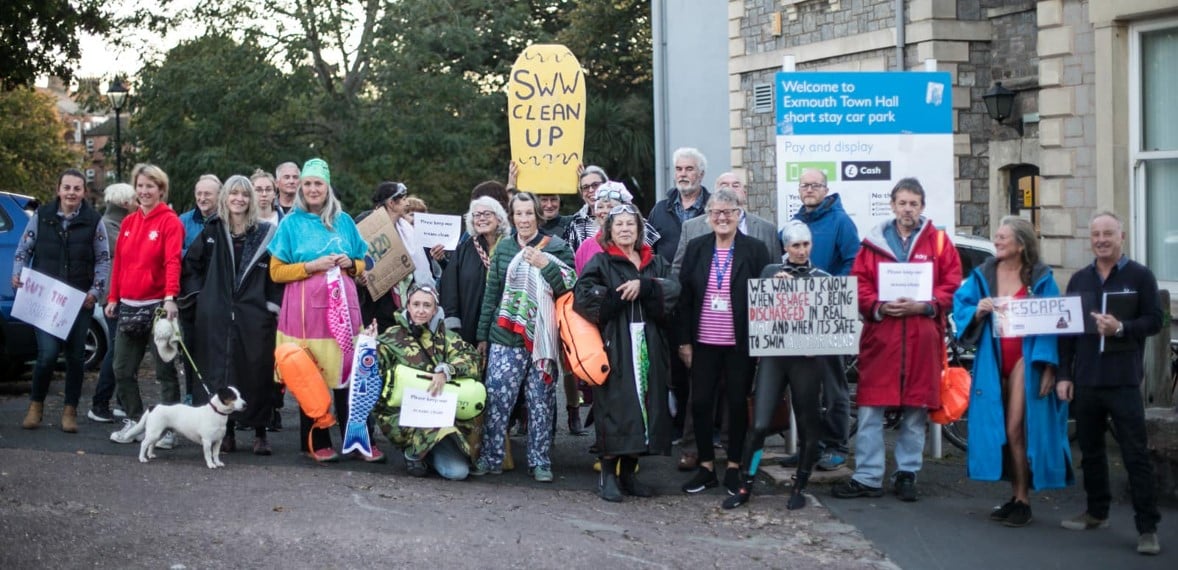
- Below Trews Weir to estuary: CSOs and other spills in the estuary. We’ll work with ESCAPE in Exmouth to support community action (Leigh Day legal action, Surfers Against Sewage Paddleout etc) and support testing/fundraising for a continuous water monitor E coli in estuary.
- Tiverton and downstream: CSOs and urban runoff. Allocate testers to fill gaps in WRT-held data, making data more accessible to volunteers so they can visualise their survey results on catchment maps and time-series charts to improve understanding of water quality changes over the long-term in a catchment context. The increased spatial and temporal density of CSI sampling will in turn help identify pollution hot-spots to alert the EA of the need to investigate those reaches in more detail.
- Culm, Clyst, Creedy: High farm run off. Phosphate, ammonia and nitrate testing with new kit (Hanna electronic test meters and Hach Nitrate teststrips).
- Upper Exe: Low farm run off but few fish. Support RETA if needed, eg, Himalayan balsam bashing with Exmoor Park Authority or Wild Tiverton CIC, and riverfly testing with Riverfly Partnership in summer.
- Small streams or brooks: Increase spatial density of sampling in sub-catchments where high nutrient load is identified, to help EA track down whether diffuse or point-source discharges are the cause of nutrient pollution from farming, industry or residential developments. Monitor potentially beleaguered brooks, eg, Grindell Brook, Wootton Brook at Lympstone, Park House Water, and explore restoration group’s interest in using nature based solutions, eg, oyster mushrooms in partnership with Flete Field Lab.
Join others taking action for the Exe
Help the Exe by taking action at home
Remember everything that goes down the drain, falls in a ditch or lands on the road ends up being washing into a river and ultimately the sea.
- Don’t put harmful chemicals and pesticides down your drains and on your garden – grit, grime, oils, soaps, detergents, chemicals, pharmaceuticals can all kill invertebrates which young salmon/trout feed on.
- Only flush pee, paper and poo down the loo – no wet wipes or sanitary towels.
- Save domestic rainwater – put a brick in your toilet and flush sparingly, sweep rather than use a patio cleaner, use grey water waste on your garden.
- Save rainwater – put water butts on all your drain pipes, conserve water for your garden and prevent runoff and flooding.
- Plant a tree its root system creates stability, absorbs rainwater and reduces the amount of soil that runs off into the river.
- Compost your garden waste – this enrich your soil with the compost – this helps retain moisture, encourages carbon sequestration (absorption) and enriches your soil.
- Use peat free compost – peatlands conserve water and are a really good carbon sink.
- Do not leave soil bare as it is more prone to run off – plant green manure such as clover or mustard to enrich your soil.
- Remove invasive species such as Japanese knotweed and Himalayan Balsam from your local river bank.
- Eat more organic & plant-based meals – this reduces chemical & manure wash-off into the river. Consider leaving fish in the river/sea!
- Join a local community group such as Transition Exeter, Transition Exmouth & Sustainable Tiverton to find out what’s happening near you.
- Talk to your friends, family, neighbours, counsellors and your MP about river protection – or join a march or action to change legislation. When individuals come together, change happens!
If - Ted Hughes
If the sky is infected
The river has to drink it
If earth has a disease which could be fatal
The river has to drink it
If you have infected the sky and the earth
Caught its disease off you – you are the virus
If the sea drinks the river
And the earth drinks the sea
It is one quenching and one termination
If your blood is trying to clean itself
In the filter of your corrupted flesh
And the sores run – that is the rivers
The five rivers of Paradise
Where will you get a pure drink now?
Already – the drop has returned to the cup
Already you are your ditch, and there you drink